Kait operated at large scale with diverse student abilities, curricula, and learning speeds.
The system needed to adapt in real time without overwhelming students, teachers, or the product team, while aligning with pedagogical principles and AI constraints.
Students were receiving the same content regardless of skill level, leading to:
The product needed to personalize learning without turning education into a black-box algorithm.
I designed the system around pedagogy first, AI second.
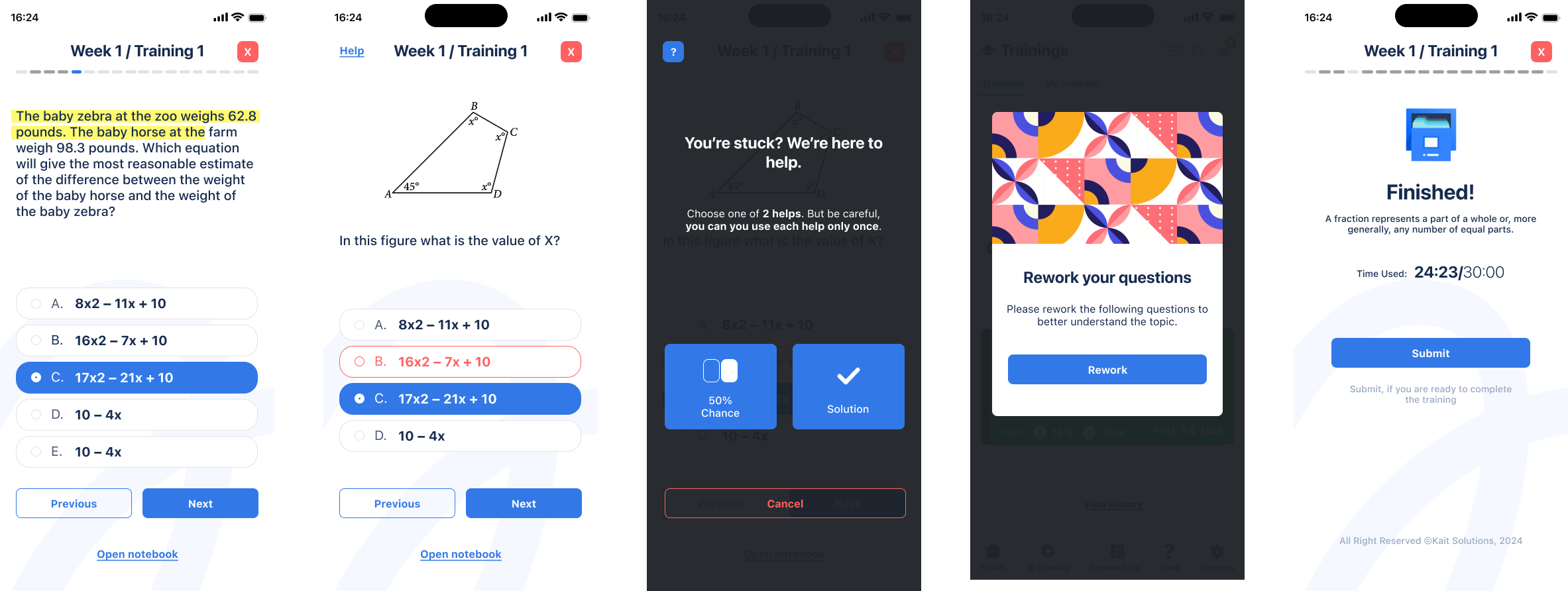
Instead of optimizing purely for correctness, the strategy focused on guiding students within their zone of proximal development, balancing challenge and confidence.
We aligned product, design, and data early to ensure adaptation felt intentional, not random.


I worked closely with engineers and data specialists to translate learning logic into usable interfaces.
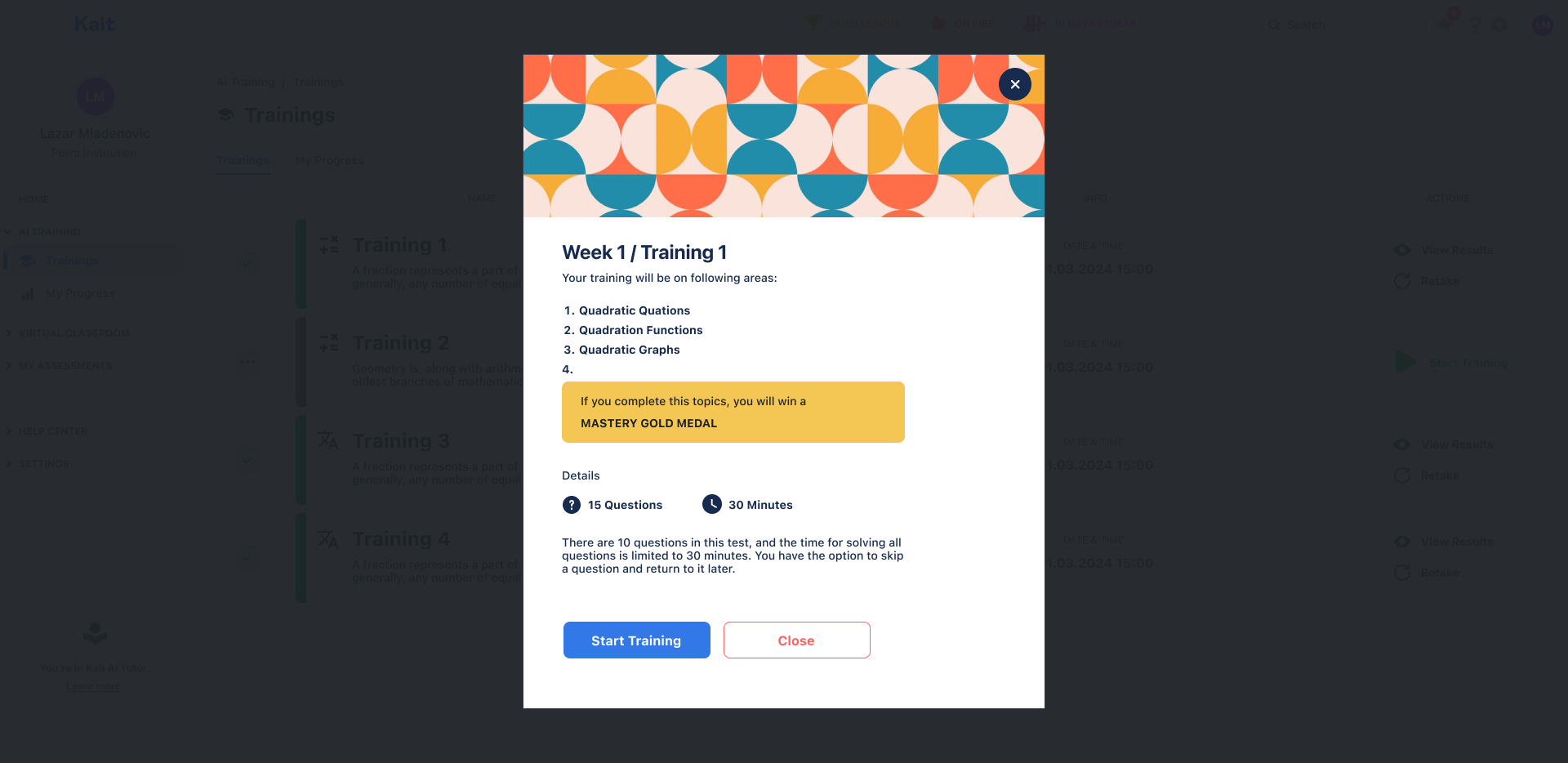
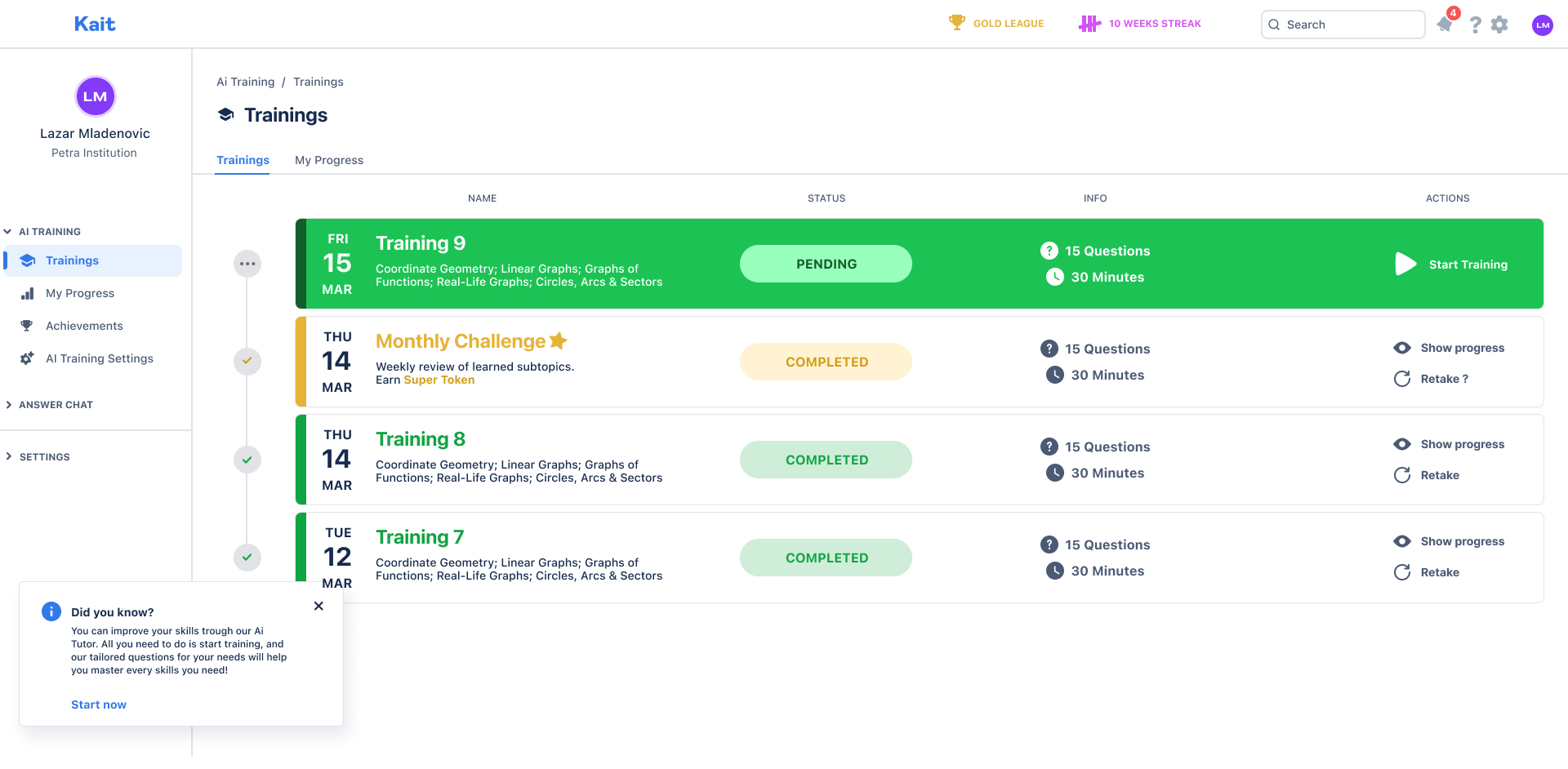
Designs were system-driven, allowing the adaptive logic to evolve without breaking the student experience.
I have created an engineering manual with explanations for each element, and with formulas/calculations.

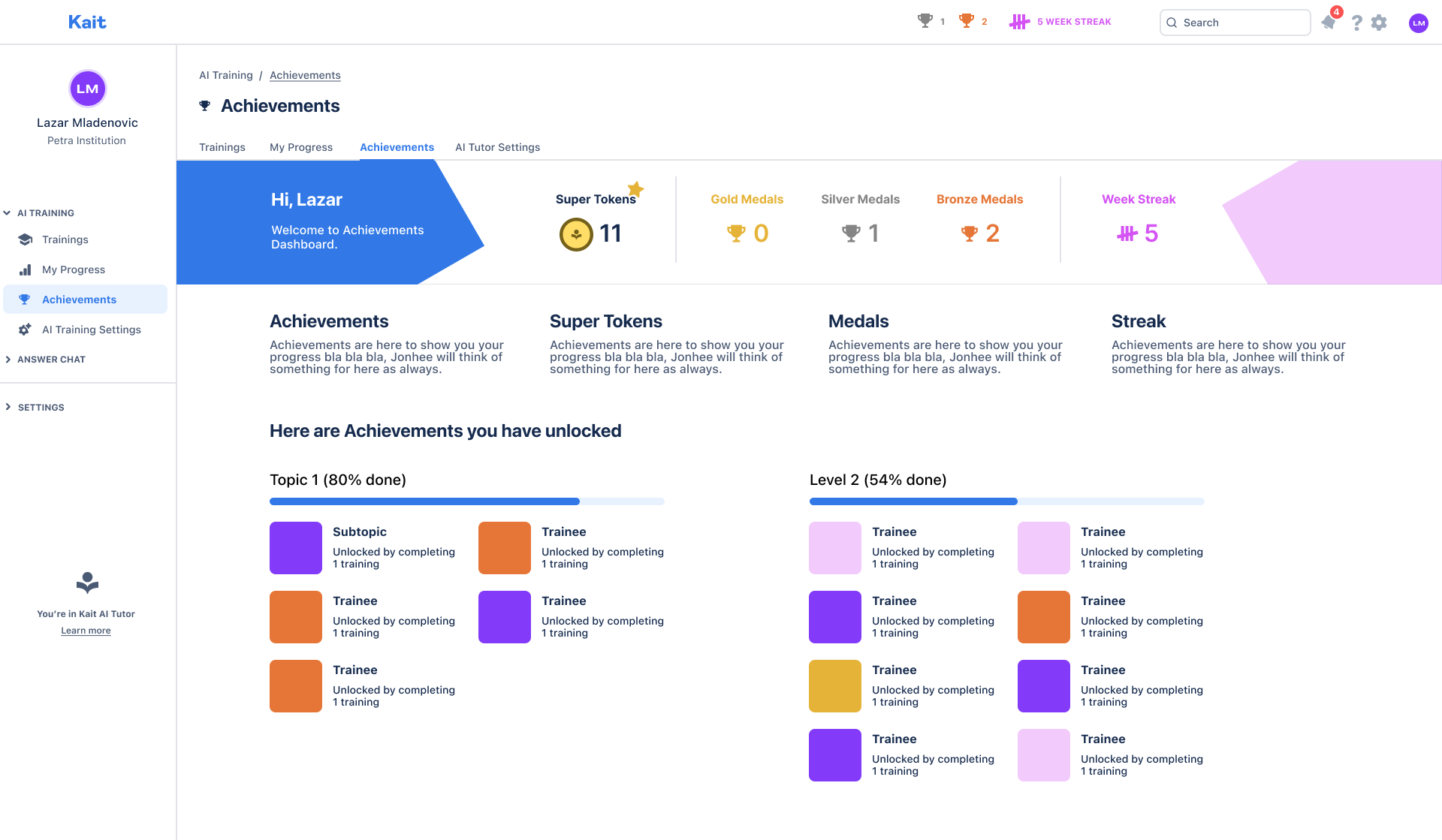
The adaptive system improved engagement and learning continuity across the platform.
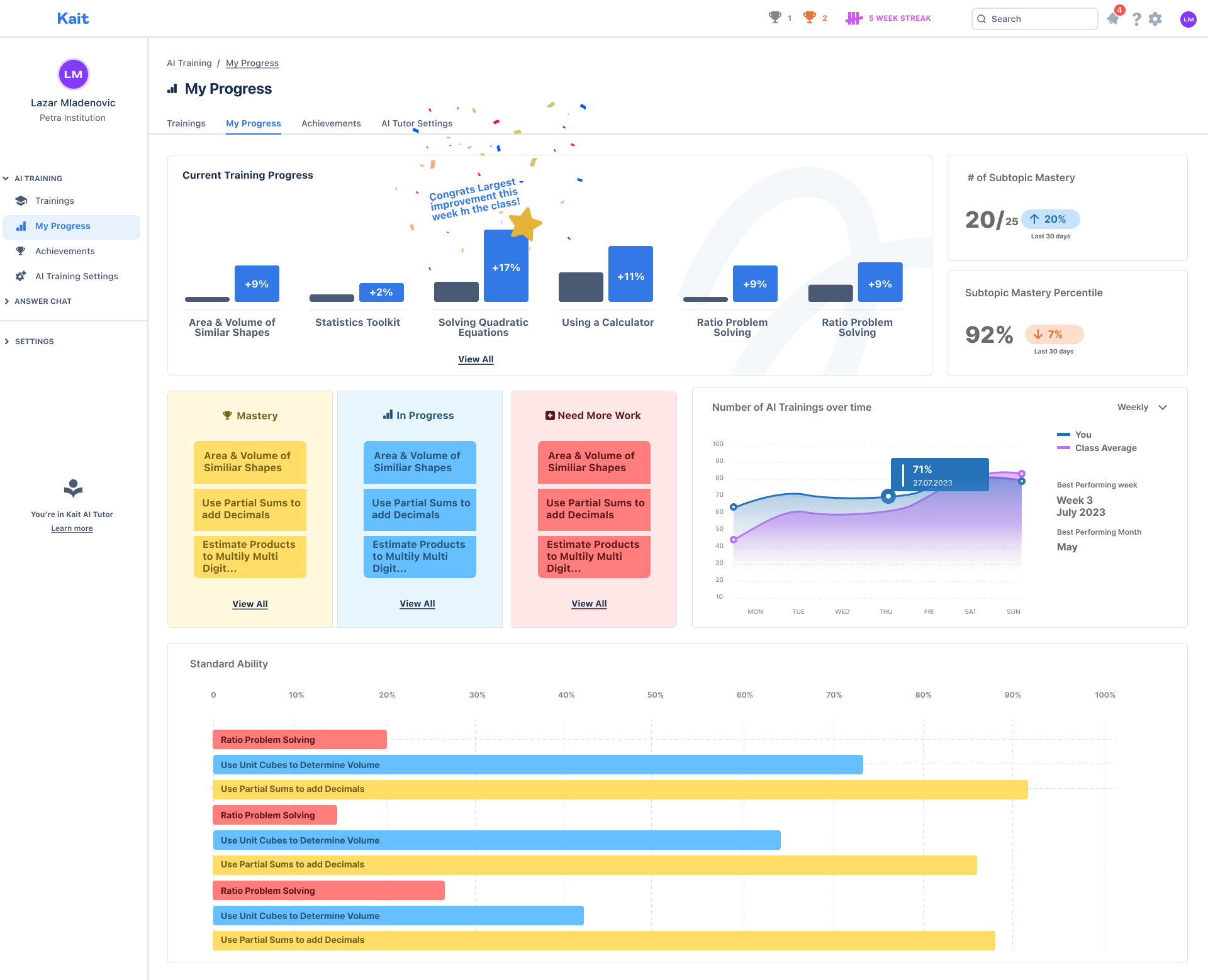
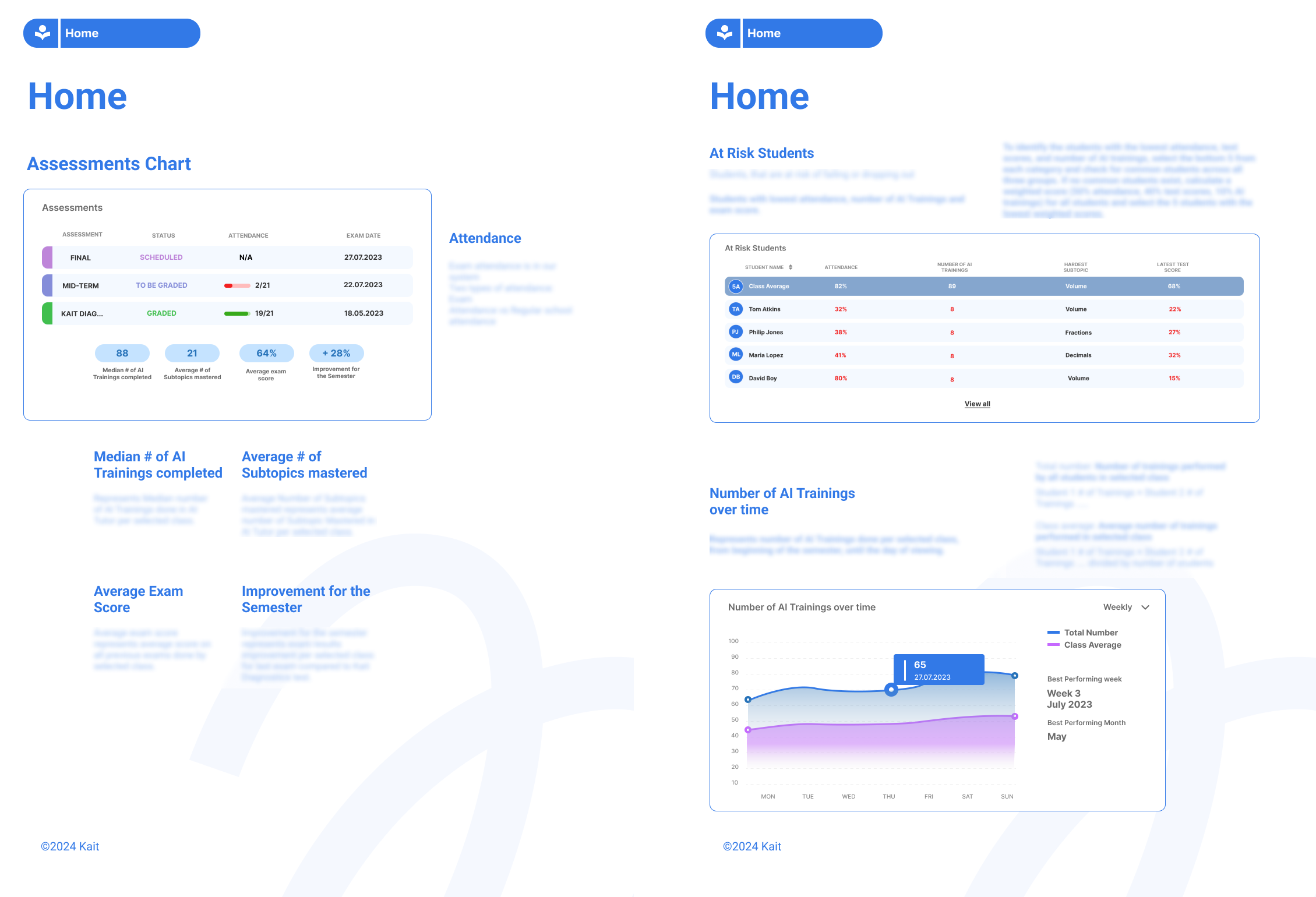
Students progressed more consistently, while teachers gained better insight into performance and risk areas at scale.

Adaptation must be explainable to build trust in educational products.
With more time, I’d expose deeper learning insights to students while keeping the experience lightweight.
This case demonstrates my ability to design AI-powered systems at scale, align UX with learning science, and create products that balance automation with human motivation.